• Home
  • Mission
  • Infrastructure
  • Validation
  • Launch System
  • Non- Binding LOI
  • Insights
  • Contact

Built once. Operated forever. The permanent corridor to orbit

The System at a Glance

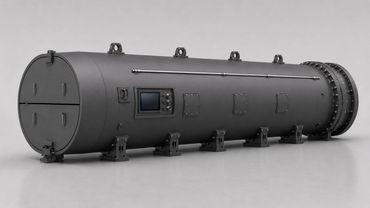
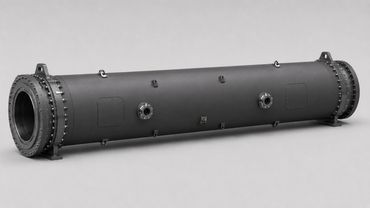
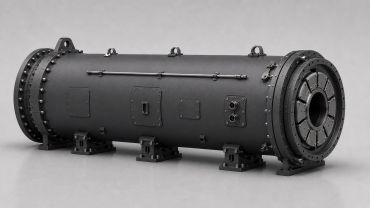
  •  Barrel length: 9 km, 900 modular segments
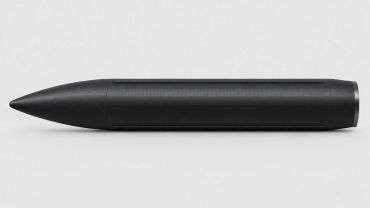
  • Payload capacity: 250 kg to LEO
  • Launch cadence: 10–30 per day
  • No onboard propellant for primary acceleration
  • Ground-based energy, solar, nuclear, grid-connected power architecture planned
  • Target cost: $500–$800/kg to LEO vs. $2,700–$6,000 today

Engineering Documentation

SupplyPath Space has completed a 650+ page Technical Architecture and Engineering Systems Manual (SP-SYS-MAN-001) covering every major subsystem from barrel segment design through AI launch orchestration, capsule thermal protection, pulse power architecture, and autonomous operations. The manual is currently under Commodity Jurisdiction review and is available to qualified reviewers under NDA and export control counsel clearance. 


  • SP-BAR — Barrel, segment architecture, all subsystems - Complete
  • SP-CAP — Capsule design and subsystems - Complete
  • SP-POWER — Power architecture, energy systems, all subsystems - Complete
  • SP-AI — AI launch orchestration system, all subsystems - Complete
  • SP-SENS — Sensors, environmental monitoring, all subsystems - Complete
  • SP-MAINT — Maintenance and inspection systems - Complete
  • SP-ASSEMBLY — Assembly and manufacturing procedures - Complete
  • SP-OPS — Launch operations and cadence management - Complete

The Case for Ground-Based Launch

Rockets are designed to be consumed. Ground-based infrastructure is designed to last. That single distinction changes everything downstream . No propellant to manufacture, transport, and load; no pad reset measured in days; no combustion event that ends the asset's life. The energy comes from renewable sources, the facility remains standing after every launch, and the per-launch cost falls as volume grows. A fixed facility is inspectable by regulators, assessable by lenders, and insurable by underwriters in a way that an expendable vehicle never can be. The economics of permanent infrastructure are not just better than rocketry, they compound in the direction of affordability over time, which is the only model capable of supporting a true space economy at scale.

IP Portfolio


SupplyPath Space has identified more than 240 patentable innovations across the full system architecture. The first filing tranche is being executed as part of the bridge round and assigned to SupplyPath IP Holdings LLC — a dedicated holding entity structurally separate from operations, positioned as an independently licensable and financeable asset. The portfolio spans every major subsystem and is managed under a formal docket system with IP counsel. Full portfolio detail is available to qualified investors under NDA.
What makes this portfolio unusual is its reach beyond launch. The core innovations in pulse power, AI orchestration, advanced thermal protection, and electromagnetic acceleration have direct crossover applications in grid-scale energy storage, autonomous industrial systems, hypervelocity testing, advanced materials manufacturing, and ground transportation. SupplyPath is not filing patents for a single product in a single market — it is building an IP estate with primary value in orbital logistics and significant secondary licensing potential across multiple industries.

Who This Technology Serves


  • LEO constellation operators — satellite internet, Earth observation, weather, AIS tracking networks that need continuous replenishment and expansion slots on a predictable schedule
  • In-space manufacturing companies — pharmaceutical crystallization, advanced alloy production, fiber optics, and semiconductor fabrication that are only possible in sustained microgravity and need continuous raw material supply
  • Defense and Space Force programs — rapid orbital asset deployment, constellation replenishment after adversarial action, responsive launch within hours not months
  • Research universities and national laboratories — microgravity experiments, materials science, biology, and physics research that is currently priced out of frequent access
  • Commercial data and communications networks — relay satellites, timing infrastructure, GPS augmentation, broadband backbone nodes


  • Emergency Response
  •  Orbital habitat and space station operators — crew supply logistics, module delivery, waste removal, consumables resupply become economically viable at $500–$800/kg vs. $6,000/kg
  • On-orbit servicing companies — fuel depots, repair platforms, and assembly nodes all depend on a continuous supply chain from the ground
  • Space tourism infrastructure — orbital hotels, transit stations, and experience platforms need affordable cargo logistics to operate
  • Lunar and deep space staging — LEO is the first stop on the way to the Moon, Mars, and beyond; reliable LEO access enables everything upstream
  • Space debris removal companies — frequent, affordable launch enables deployment of capture and deorbit vehicles at scale


  • Aerospace manufacturers — capsule production runs, barrel segment fabrication, modular component supply chains that repeat at scale rather than one-off
  • Advanced energy and power systems companies — pulse power architecture, capacitor banks, flywheel energy storage, grid integration, and power conditioning systems represent entirely new commercial contracts
  • Advanced materials suppliers — carbon-carbon composite, ultra-high-temperature ceramics (UHTC), titanium structural components, and thermal protection materials at infrastructure scale
  • AI and autonomy technology firms — launch orchestration software, sensor fusion, fault isolation systems, and autonomous operations platforms
  • Construction and civil engineering firms — 9 km facility construction, underground barrel installation, power plant integration, and campus development
  • Systems integrators — facility-level systems integration across power, mechanical, software, and operations is a major long-term contract
  • Telecommunications and ground station networks — telemetry, tracking, and command infrastructure for 10–30 daily launches requires significant ground network support


  • Infrastructure lenders and project finance institutions — long-duration, asset-backed lending against a permanent facility with contracted revenue
  • Insurance and underwriting firms — launch infrastructure insurance is a new product category; payload insurance at high cadence creates new actuarial models
  • Institutional investors — infrastructure funds, pension funds, and sovereign wealth funds that prefer long-duration assets with predictable cash flow
  • Export credit agencies — government-backed financing for infrastructure with national security and economic development dimensions an answer to this item.


  •  Emergency Response
  • FAA Office of Commercial Space Transportation — regulatory framework for a new launch modality
  • NASA — potential customer for science payload delivery, technology demonstration partner, and lunar logistics staging
  • DARPA and AFWERX — technology demonstration and dual-use development programs
  • Department of Energy — grid-scale power integration and energy storage technology development
  • State and regional economic development — New Mexico campus creates construction jobs, permanent operations employment, supply chain development, and technology sector growth
  • Allied nation space agencies — ESA, JAXA, CSA, and others as potential launch customers and program partners


  • Hypervelocity materials testing — the same pulse acceleration technology enables ground-based testing of materials at orbital reentry speeds, replacing expensive and limited ballistic range facilities
  • High-energy physics research — electromagnetic acceleration infrastructure has crossover applications in particle physics and directed energy research
  • Terrestrial freight acceleration — the engineering of high-speed ground-based logistics has long-term crossover into maglev freight and passenger transportation
  • Planetary defense — a ground-based system capable of accelerating 250 kg to Mach 22.9 has obvious application in interceptor and deflection scenarios
  • Military logistics — rapid ground-based delivery of payloads across long distances using sub-orbital trajectories
  • Power grid innovation — the pulse power and flywheel storage architecture developed for SupplyPath advances grid-scale energy storage technology applicable across the entire energy sector
  • etc.


Express Your Interest

View Non-Binding LOI

SupplyPath Space

Info@SupplyPathSpace.com

Copyright © 2026 SupplyPath Space - All Rights Reserved.

This website uses cookies.

We use cookies to analyze website traffic and optimize your website experience. By accepting our use of cookies, your data will be aggregated with all other user data.

Accept